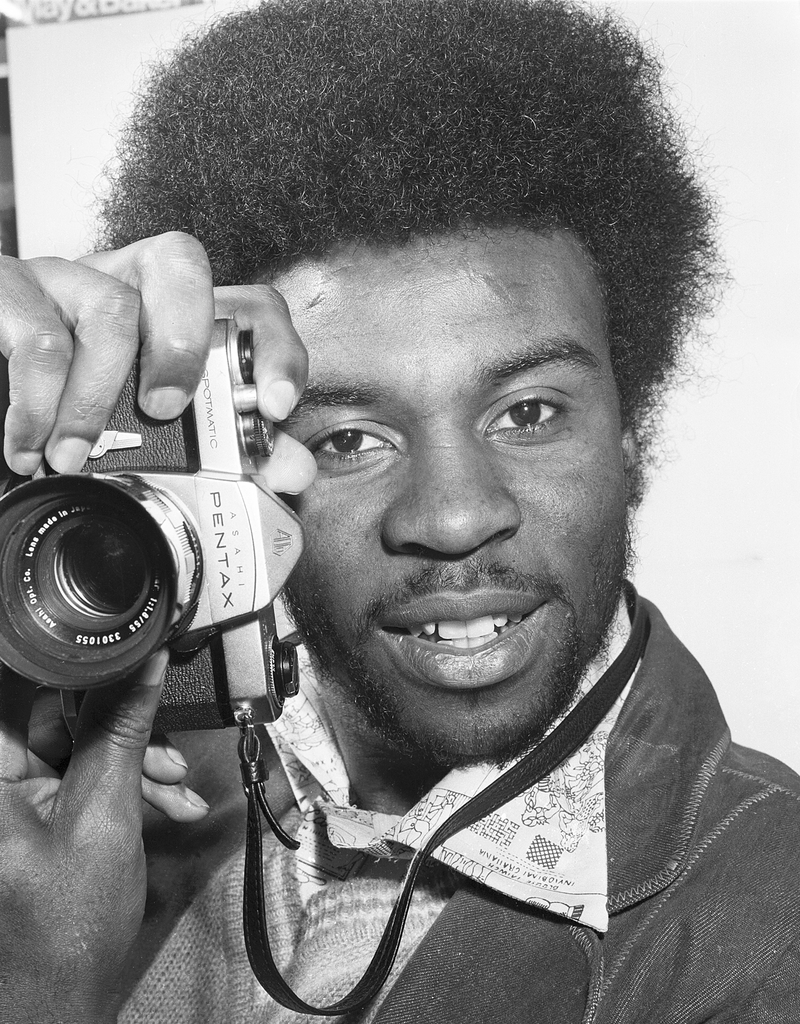
neil kenlock
Neil Kenlock is one of the most influential photographers and media pioneers in modern Britain, and co‑founder of ROOT magazine and Choice FM radio.
His photography across portraiture, documentary, fashion, beauty, celebrity and international work forms one of the UK’s most significant collections and a defining record of Black British history.
capturing his community
Born in Port Antonio, Jamaica, Kenlock moved to Brixton in south London in 1963 in the post-Windrush era, the historic migration of Caribbean people to the UK. During his school years, he developed a passion for art and drawing, initially aspiring to become a professional artist. However, his direction shifted entirely when he discovered photography. Inspired by the leading photographers of the era, he realised how rare it was to see Black professionals with a camera. This sparked his determination to become a Black photographer who could represent his community.
Photography and print
He formally trained in photography and printing, working across various production studios and industry organisations. With this expertise, he opened his own studio on Graham Road in Stockwell. His studio became a vital hub where he actively taught and trained his peers and inspired other Black photographers.
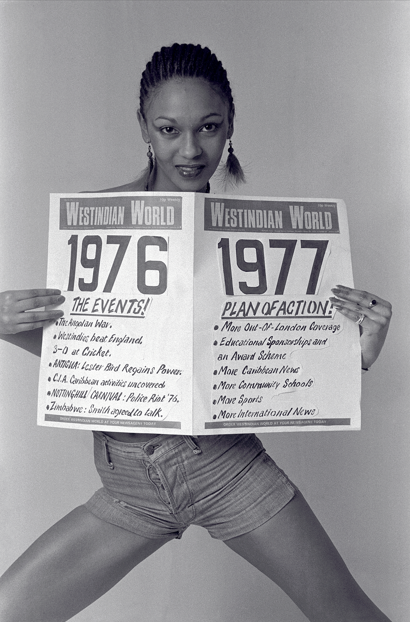
He was appointed the picture editor for the West Indian World newspaper, the first national paper dedicated to Black issues and stories that mainstream media didn't publish. During his tenure, he captured leaders in his community and global icons including Bob Marley, Marvin Gaye, Muhammad Ali, and Stevie Wonder. Alongside his work, Kenlock became the photographer for the British Black Panther movement. Armed with his camera, Kenlock captured key moments of UK civil rights activism, from historic anti-racist protests and the landmark Mangrove Nine trial to intimate, powerful portraits of activists like Olive Morris and Darcus Howe.
As the his career developed, Kenlock successfully balanced raw political documentation with vibrant cultural style. Spotting a gap in the media publishing landscape, he pivoted to become a cultural entrepreneur. In 1979, he co-founded ROOT magazine, the first high-fashion, glossy lifestyle publication in Britain designed explicitly to centre and celebrate Black British culture, identity, and beauty.
radio and media
Kenlock’s impact on the British culture reached an extraordinary turning point with the launch of Choice FM. He entered the radio industry because he recognised a massive void in broadcasting, mirroring the gap he had previously identified in publishing. He believed that a Black-owned station would serve as a powerful tool to represent his community, support Black artists, and empower local businesses, so he spent years campaigning and lobbying for a licence. This relentless fight culminated in 1990 when Choice FM made history as the first 24-hour commercial licensed radio station serving the black community in the UK. Under his leadership, alongside his co-founders, the trailblazing station successfully expanded, eventually securing two frequencies in London, 96.9FM and 107.1FM, and a third in Birmingham. While he never completely put down his camera, Kenlock focused his energy on guiding the commercial growth and long-term vision of the station as its Sales and Marketing Director. Choice FM grew into a cultural powerhouse that launched global superstars and served as a vital voice for community advocacy. This historic achievement was later honoured by the community with an official blue heritage plaque unveiled at its original Brixton headquarters in Trinity Gardens. For his boundary-breaking, multi-decade contributions to media and the arts, Kenlock was appointed an MBE in 2021.
THE ARCHIVE
Although he retired a few years ago, the scale and resonance of Kenlock's vision are larger than ever, continuing to expand exponentially on the global stage. The Neil Kenlock Archive remains a highly dynamic, active catalyst in the creative world, frequently featured in major international exhibitions, heritage projects, fashion narratives, and global media productions. Today, while managed independently, a curated selection of his most iconic works is held in the collections of renowned cultural institutions, including the Black Cultural Archives, Tate, the Victoria and Albert Museum (V&A), the London Museum, and the Smithsonian National Museum of African Art. His archive stands as one of the most important collections in the UK, telling the story of a true pioneer and the Black community who made and shaped modern British history.
“Neil Kenlock helps us to better understand the story of London’s black communities and to appreciate the huge artistic and cultural impact they have had on all our lives. He is a significant photographer whose work documents a key chapter in London’s post-war life.”
Mike Seaborne, former curator of photographs at the Museum of London